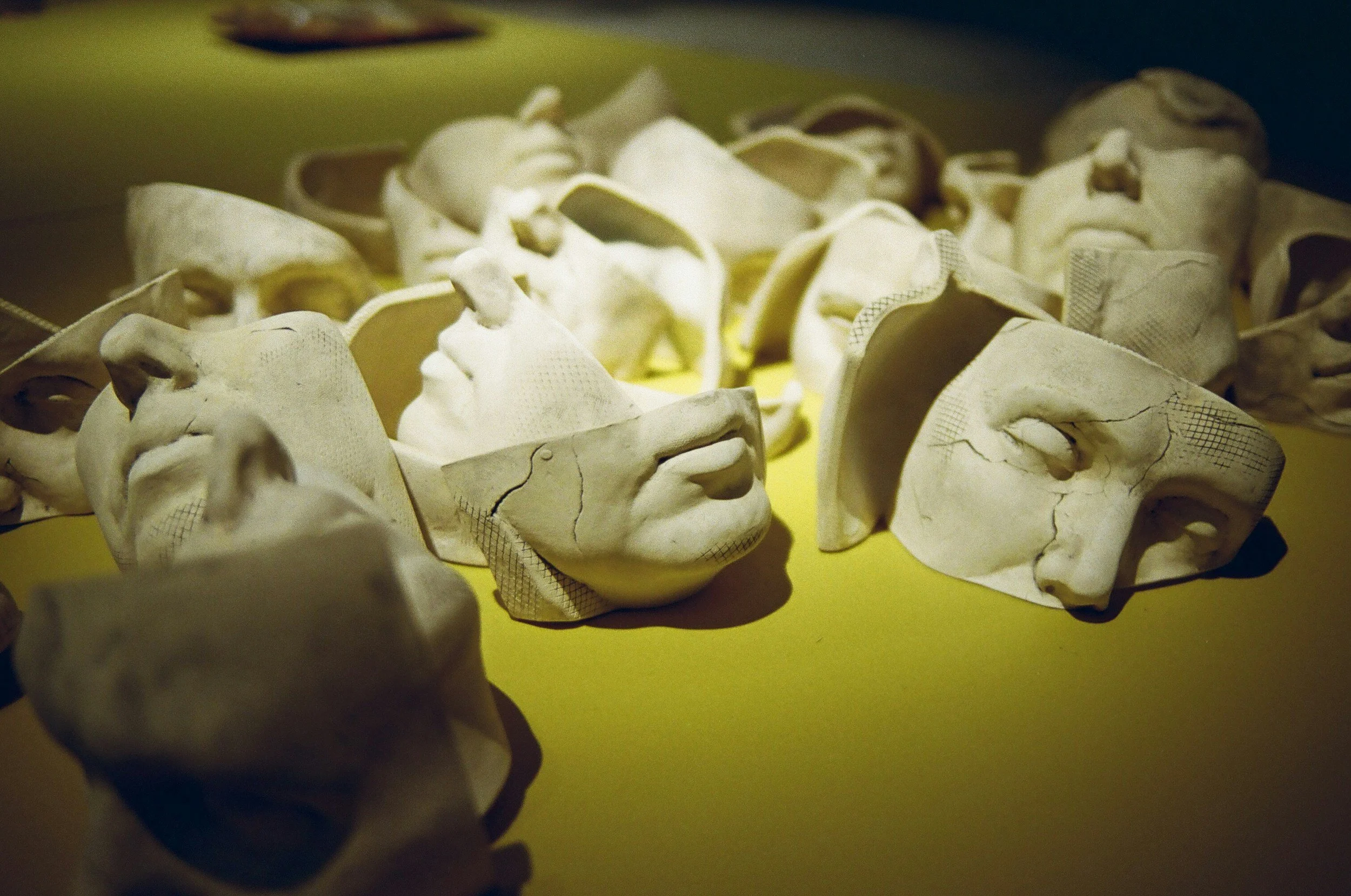
The Roles We Learn to Play: Fixers, Quiet Ones, Strong Ones, and More
Welcome Back Always,
Most of us don’t grow up naming the roles we play in our families. We just learn, often without realizing it, how to show up in ways that keep things as steady, safe, or connected as possible with the people we love
Over time, though, many of us start to notice a pattern: we’re always the one people lean on, or the one who lightens the mood, or the one who stays quiet so things don’t get worse. We might not have had words for it back then, but looking back, it can feel like we were cast in a role we never officially auditioned for.
Maybe you became the one who smoothed things over, the one who made everyone laugh, the one who took care of younger siblings, or the one who tried not to need too much. These roles can bring both good and hard things—but almost always, they started as ways to survive and make it through the environments we were in, with as much love and safety as we could find.
What I Mean by “Roles”
When I say “roles,” I’m talking about the patterns we fall into again and again in our families and close relationships. They’re not fixed identities or diagnoses; they’re more like familiar scripts your nervous system knows by heart.
You might recognize yourself in roles like:
The strong one
The person who holds it together, doesn’t “break down,” and often gets leaned on in a crisis.The fixer or peacemaker
The one who tries to smooth conflict, calm people down, and make things okay for everyone.The quiet one
The person who keeps their feelings inside, stays out of the way, or doesn’t “add” to the stress.The achiever
The one who overperforms, gets things “right,” and often tries to make the family look or feel okay from the outside.The funny one
The person who brings humor, lightness, and distraction when things feel tense.
These are just a few examples—not a complete list of all the ways people learn to show up. You might see yourself clearly in one role, or notice that you move between several of them depending on the situation, the relationship, or the season of your life. That flexibility doesn’t make your experience less real; it often reflects how many different strategies you’ve had to develop to get through what you’ve lived. Roles as Survival (Not Personal Failure)
The roles we take on don’t appear out of nowhere. They grow out of what was happening around us and what our younger selves understood about how to stay connected and safe.
Think about things like:
What was happening in the family (divorce, illness, loss, financial stress, conflict, secrets).
How adults around you handled their own emotions and responsibilities.
What was praised, what was ignored, and what was shut down.
If the grown‑ups in your life were overwhelmed, becoming the “strong one” or caretaker might have been your way of helping the whole system hold together.
If conflict felt scary or unpredictable, being quiet, agreeable, or funny might have been your way of lowering the temperature in the room.
If love felt tied to performance, becoming the achiever may have been your best shot at feeling secure, seen, or proud of yourself.
When we look at it this way, these roles start to feel less like flaws and more like creative survival strategies. They were your way of saying, “Okay, this is what this environment needs from me. Let me try to be that.”
The Gifts and Costs of These Roles
Every role comes with both gifts and potential costs. It can be really kind to yourself to name both sides.
The strong one
Gift: dependable, grounded, resilient, often the rock for others.
Cost: has a hard time asking for help, can feel invisible or emotionally exhausted, may feel like there’s no room to fall apart.
The fixer/peacemaker
Gift: empathic, tuned‑in, good at reading the room, often deeply supportive.
Cost: may neglect their own needs, feel responsible for everyone’s mood, or fear that honest conflict will blow everything up.
The quiet one
Gift: observant, thoughtful, often a steady listener who notices what others miss.
Cost: may feel unseen or misunderstood, and may lose touch with their own wants and feelings.
The achiever
Gift: motivated, organized, capable, often the one people can count on.
Cost: may feel like they are only as worthy as their performance, struggle to rest, or feel terrified of messing up.
The funny one
Gift: brings lightness, connection, and relief when things are heavy.
Cost: may feel like they can’t show sadness, anger, or vulnerability without disappointing people or “ruining the vibe.”
You don’t have to throw away these parts of you. The goal is usually not to get rid of the role, but to loosen it—so it’s something you can choose, not something that runs you.
How These Roles Follow Us Into Adulthood
Even when we physically leave home, the roles we learned there often come with us.
In friendships, you might become the therapist‑friend who is always there for others but rarely feels like there’s space for your own stuff.
In romantic relationships, you might automatically over‑function—planning, fixing, managing—while struggling to let someone else show up for you.
At work or school, you might be the dependable overachiever who quietly burns out, or the person who stays silent even when you have important things to say.
If you notice yourself thinking, “Why do I always end up in this position?” it might be less about bad luck and more about a very old role that your system still recognizes as “safe” or familiar—even when it’s also exhausting.
Again, this isn’t about blame. It’s about gently noticing how strategies that once protected you might be asking to be updated.
Gentle Questions to Get Curious
You don’t have to unpack your entire history at once, and you don’t have to fit neatly into just one role. You might hold one or two of these questions and notice what comes up over time:
Growing up, what did you feel like you were “known for” in your family (even if no one ever said it directly)?
When there was stress or conflict, what did you usually do—step in, disappear, joke, perform, take charge, freeze?
In your current relationships, where do you still find yourself being “the strong one,” “the fixer,” “the quiet one,” “the achiever,” or “the funny one”—or some mix of these?
Is there a part of you that feels tired of that role, or curious about what it might be like to show up a tiny bit differently?
There are no right or wrong answers here. These questions are simply invitations to see your patterns with more context and less judgment.
Slowly Making Room for New Roles
If you start to notice a role you’re ready to loosen, the shift doesn’t have to be dramatic or perfect. It might look like:
Letting yourself say, “I actually don’t have capacity for that right now,” even once, and seeing what happens.
Sharing one small, real feeling with a trusted person instead of immediately going into “I’m fine” mode.
Allowing yourself to rest without making up for it by overworking later.
Letting someone else take the lead or solve a problem, even if your instinct is to jump in and handle it.
These tiny experiments can be powerful. They’re ways of telling your nervous system, “Maybe I don’t have to be only this one version of myself to be safe or loved.” Over time, people do build more flexible ways of being in their families and relationships—especially when they have support and are able to make sense of where the old roles came from.
A Soft Closing
The roles we learned to play were often acts of love, protection, and survival. They helped us make it through complicated environments with the tools we had at the time. There is nothing wrong with you for having them.
Over time, it’s also okay to ask: Is this role still serving me the way it used to? And if not, what small, gentle shifts might make more room for the parts of you that haven’t had as much space to breathe?
In future posts, I’ll keep weaving this thread into more specific areas—like how we cope with big feelings, how boundaries fit into all of this, and what it can look like to slowly choose new patterns while still honoring where you come from.
With Love,
Drea
Gentle reminder: This little corner of the internet is for education and reflection—it’s not therapy, and it doesn’t create a therapy relationship between us. If anything you read here feels heavy or brings up more than you can hold alone, please be kind to yourself and consider reaching out to a trusted person, a licensed therapist in your area, or local crisis resources for more support.
References
(For folks who like to see where ideas come from.)
Psychology Today. (2023, March 22). 8 common dysfunctional family roles.
MedCircle. (2025, January 27). Family dynamics: Attachment theory, communication, and roles.
Fraley, R. C. (n.d.). A brief overview of adult attachment theory and research. University of Illinois.
Leone Centre. (2024, June 23). Intergenerational patterns in family therapy.
Morris, A. S., Silk, J. S., Steinberg, L., Myers, S. S., & Robinson, L. R. (2007). The role of the family context in the development of emotion regulation. Social Development, 16(2), 361–388.
University of Illinois, College of ACES. (2023, December 5). The impact of children taking on parental roles in their family.
Doors of Hope. (2026, January 23). Attachment styles and family systems: How our early relationships shape us.
Rodgers Counseling & Consulting. (2026, February 19). Breaking generational patterns in families.
If You’d Like to Explore More
You absolutely don’t need to read more to belong here, but if you’re feeling curious, these are a few accessible places to go deeper:
APA Division 43 (Society for Couple and Family Psychology). (2022, February 28). Not just mothers: Understanding the unique role of attachment to fathers.
Bowen Center. (n.d.). Multigenerational transmission process.
